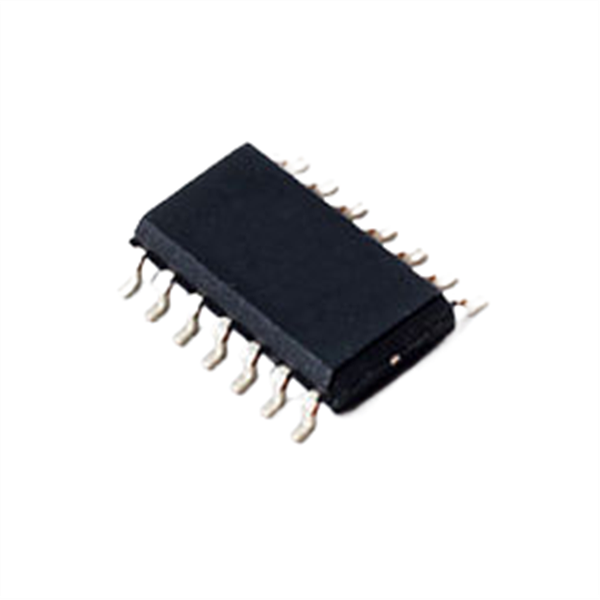
Features:
1. Ultra low static power consumption
Static current (Iq): 300nA~900nA (typical value), much lower than conventional operational amplifiers (μ A/mA level).
A single battery (such as button battery, lithium battery) can provide long-term power supply, significantly extending the standby and working time of the device.
2. Wide/low voltage power supply range
Working voltage: usually 1.4V~5.5V, compatible with single power supply (1.8V/3.3V/5V) or dual power supply.
Adapt to the full cycle of battery voltage attenuation without the need for complex boost circuits.
3. Rail to Rail input/output
The input common mode voltage and output swing can be close to the positive and negative rails of the power supply, maximizing the dynamic range of the signal at low voltage.
4. Low input bias current
The input bias current is usually at the pA level (picoampere level), which is suitable for signal acquisition in high impedance sensors such as optoelectronics and piezoelectrics.
5. Miniaturization packaging
Mainstream packaging: SOT-23-5, SC70-5, MSOP-8, DFN-8, etc., saving PCB space.
6. Low frequency application optimization
Gain bandwidth product (GBW): several kHz to several hundred kHz, designed specifically for low-frequency (DC to tens of Hz) signal conditioning.
Applications:
1. Portable/Wearable Medical Devices
Oximeters, blood pressure monitors, electrocardiogram (ECG) monitors, portable blood glucose meters: amplify weak physiological signals and maximize battery life.
2. Battery powered and energy harvesting system
Wireless sensor nodes (temperature/humidity, pressure), Internet of Things (IoT) devices, button battery powered instruments: long-term unmanned operation.
3. Low frequency sensor signal conditioning
Thermocouples, RTDs, strain gauges, photodiodes: low-power amplification and filtering.
4. Portable Consumer Electronics
Smart watches, wristbands, remote controls, hearing aids: low voltage, low power consumption, small size.
Battery current monitoring, remote environmental monitoring, automotive electronics (compliant with AEC-Q100).