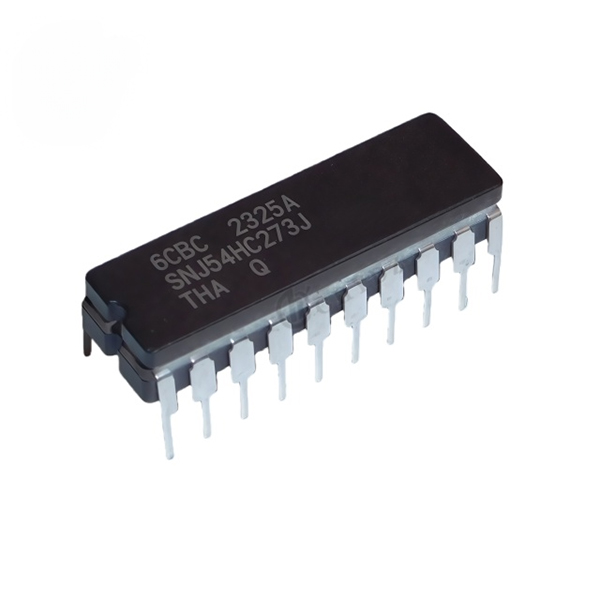
Low voltage high-speed comparator is an analog integrated circuit whose core function is to quickly compare the magnitude of two input voltages and output corresponding high/low digital levels.
Features:
1. Extremely fast response speed
The propagation delay is as low as 1.8ns to 50ns.
The output edge is steep (rise/fall time<2ns), directly driving the CMOS/TTL logic.
2. Wide and low voltage power supply range
Single power supply operates between 1.8V and 5.5V, with some supporting ± 1V dual power supply.
Low static current (μ A), suitable for battery power supply.
3. Rail to Rail feature
Input: The common mode voltage can exceed the power rail (GND~Vcc+0.3V).
Output: The swing amplitude is close to the power supply voltage, improving the digital signal noise tolerance.
4. Built in hysteresis
Typical 2mV~10mV internal hysteresis to prevent output oscillation caused by noise.
5. Flexible output
Push pull output (direct drive)/open drain output (convenient line connection).
Partially equipped with LVDS high-speed differential output or latch function.
6. Small volume packaging
SC70-5, SOT23-5, SOP8, MSOP8, QFN, etc. are suitable for high-density PCBs.
Applications:
1. High speed signal detection
Zero crossing comparator: convert AC signal to square wave, measure frequency/phase.
Peak/valley detector: high-speed signal envelope detection.
Window comparator: whether the voltage is within the set range.
2. High speed data conversion
High speed ADC (Flash/SAR): Core comparison unit.
Data/clock recovery: signal regeneration in high-speed digital communication.
3. Measurement and Instruments
High speed oscilloscope, signal analyzer, high-precision voltage comparison.
4. Communication and Interface
LVDS/high-speed line receiver, cable signal shaping.
High speed level conversion and pulse synchronization.
5. Consumer and Portable Electronics
Battery management, overvoltage/undervoltage monitoring, power failure protection.
Wearable devices, IoT sensor signal processing.
6. Automobile and Industry
Motor control, position sensor (high-speed comparison of current/voltage).
Industrial automation, high-speed triggering system.