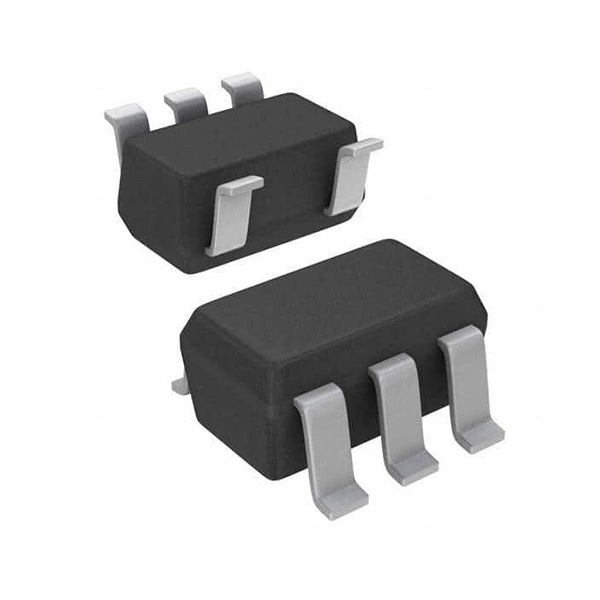
Its core function is to protect multiple signal lines from damage caused by transient high voltage pulses such as electrostatic discharge (ESD) and electrical fast transient (EFT) on a single chip, and it is widely used in various high-speed digital interfaces.
Features:
1. Multi channel integration
Internally integrated 2/4/8/16 independent protection channels, a single chip can protect a set of data cables (such as differential pairs of USB and HDMI).
Compared to using multiple single channel diodes, it saves PCB space, simplifies wiring, and reduces costs.
2. Ultra-low junction capacitance
Specially optimized for high-speed signals, the channel capacitance can be as low as 0.25pF~1pF.
Ensure that high-speed signals such as USB 3.2, HDMI 2.1, 10Gbps Ethernet are not attenuated or distorted.
3. Extremely fast response speed
The response time is less than 1 picosecond (ps), and it quickly conducts before the electrostatic pulse destroys the chip, clamping the voltage at a safe level.
4. High ESD tolerance
Complies with the IEC 61000-4-2 international standard, typically reaching ± 15kV~± 30kV (contact/air discharge).
5. Good parameter consistency
The capacitance, resistance, and breakdown voltage of each channel are highly consistent when manufactured on the same wafer.
Specially suitable for symmetrical protection of differential signals (such as LVDS) to avoid signal imbalance.
6. Low leakage current&low clamp voltage
The static leakage current is extremely low (nA level) and does not affect standby power consumption.
Under strong transient impact, the clamping voltage is low, providing more sufficient protection for the backend chip.
Applications:
1. Consumer Electronics High Speed Interface
USB 2.0/3.2/4, Type-C: protects D+/D -, CC, SBU pins.
HDMI 2.1, DP, eDP: Protect high-speed TMDS differential signal channels.
SD/MMC card, SIM card: protects I/O data ports.
2. Communication and network equipment
Ethernet (10/100/1000M): protects differential signal lines of RJ45 interfaces.
SFP/SFP+optical module, M.2 interface: high-speed signal ESD protection.
3. Automotive Electronics
Vehicle Ethernet, CAN/LIN bus, LVDS camera: Complies with AEC-Q100 standard.
4. Industrial control
RS-485, RS-232, PLC I/O ports: protect against strong static electricity and surge interference in industrial sites.